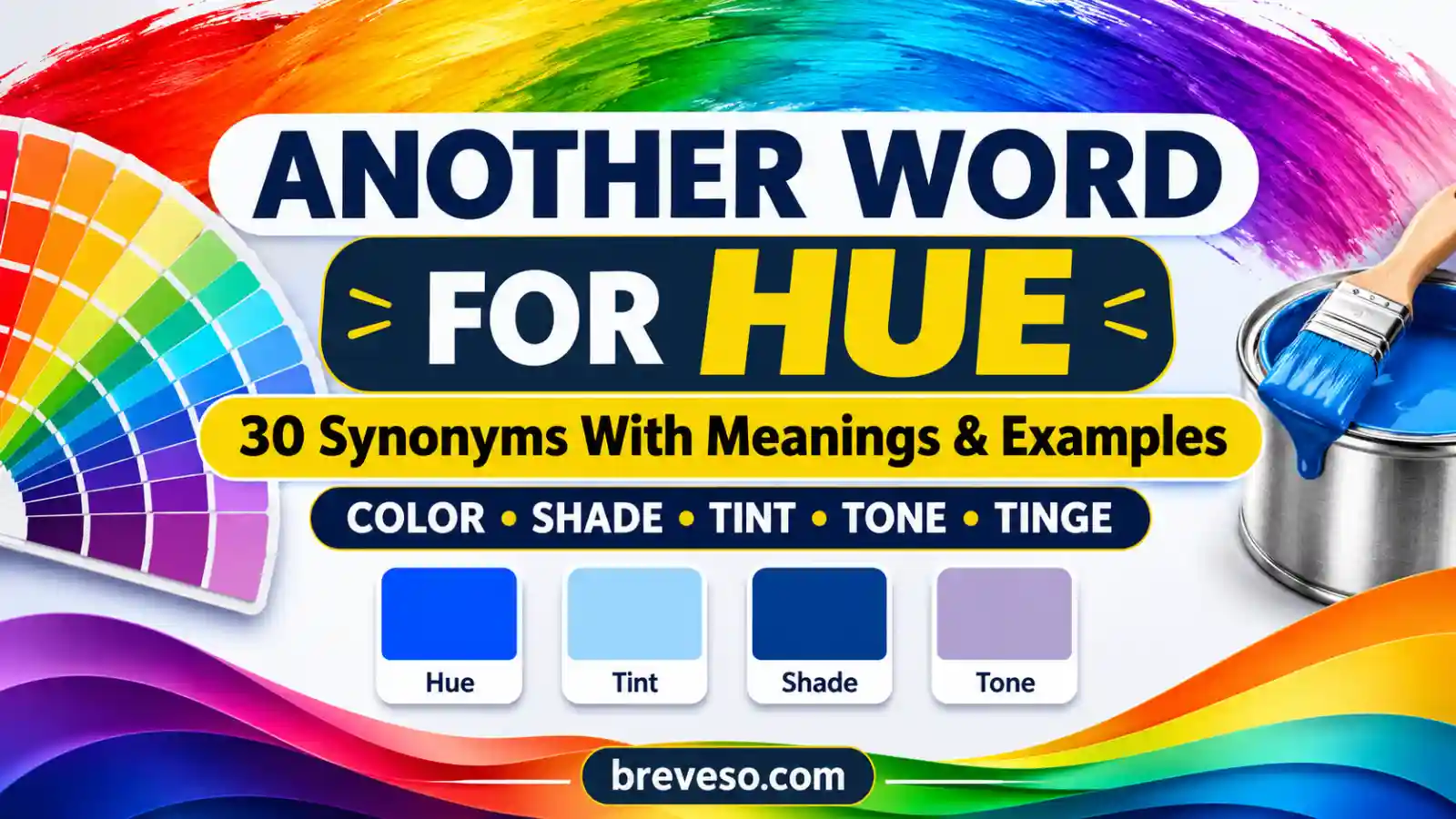
Another word for hue is “color.” Shade, tint, and tone are the next closest alternatives. Each one describes how a color looks, but each has its own focus. “Shade” suggests a darker or slightly different version, while “tone” points to the overall feel of a color. “Tint” suggests a lighter, softer one.
“Hue” also has non-color meanings. In formal writing, it can mean the overall character of something, as in “parties of every hue.” The best alternative depends on whether you describe a color, a technical color property, or a type of person or belief.
Quick list: color, shade, tint, tone, tinge, cast, undertone, nuance, complexion, stripe
This article covers 30 alternatives with meanings, IPA, usage notes, examples, and context. Some are direct synonyms. Others are related words that fit only certain situations.
On this page
- At a Glance: Hue Synonyms and Related Alternatives
- Which Word Should You Use?
- Exploring the Multiple Meanings of “Hue”
- Analyzing 30 Hue Alternatives in Detail
- Hue vs. Shade vs. Tint vs. Tone
- Hue and Opposite/Paired Word Pairs
- Common Word Partners of “Hue”
- Idiomatic Phrases Featuring “Hue”
- Word Formation of “Hue”
- Common Word-Choice Mistakes
- FAQs
- Conclusion
At a Glance: Hue Synonyms and Related Alternatives
| Alternative | Part of Speech | Meaning | Register / Tone | Ideal Context |
| color | noun | The look of something in terms of red, blue, green, and so on | Neutral | Everyday speech and writing |
| shade | noun | A variety of a color, often darker | Neutral | Paint, clothing, art |
| tint | noun | A light or faint variety of a color | Neutral | Soft or pale colors |
| tone | noun | A shade or the overall quality of a color | Neutral | Design, decor, art |
| tinge | noun | A slight trace of color | Neutral to literary | Faint color in water, sky, skin |
| cast | noun | A slight color that changes the main color | Neutral | Photos, light, metals |
| undertone | noun | A subtle color beneath the main one | Neutral, technical | Skin, makeup, paint |
| saturation | noun | The strength or purity of a color | Technical | Photo editing, design |
| complexion | noun | The overall character of something | Formal, figurative | Politics, debate, mood |
| stripe | noun | A kind or sort, especially of belief | Informal to neutral | “Of every stripe” |
Which Word Should You Use?
| If you want to… | Use | Why |
| Describe any color in plain speech | color | It is the simplest and most common choice. |
| Name a darker or slightly different version of a color | shade | Most readers know “a shade of blue.” |
| Describe a pale, soft version of a color | tint | It points to lightness. |
| Mention a faint trace of color | tinge | It shows the color is slight. |
| Describe a subtle difference in a color | nuance | It stresses fine detail. |
| Talk about color strength in design work | saturation | It names a technical trait of color. |
| Show the many colors in a design | palette | It covers a group of hues. |
| Describe groups with different beliefs | stripe or persuasion | They match the figurative sense of “every hue.” |
Exploring the Multiple Meanings of “Hue”
1. Color
- Meaning: A color, such as red, blue, or green.
- Explanation: Dictionaries list this as a main sense of hue, with the example “all the hues of the rainbow.” Hue sounds a little more descriptive than “color,” so writers often pick it for scenery and art.
- Example: The mountains glowed in hues of orange and gold.
2. A Shade or Variety of a Color
- Meaning: A particular shade, tint, or gradation of a color.
- Explanation: This sense focuses on small differences within one color family. Writers use it with words like pale, deep, or soft.
- Example: She chose a pale hue of green for the nursery.
3. The Technical Property of Color
- Meaning: The quality that lets people classify a color as red, yellow, green, blue, or a mix between them.
- Explanation: This is the science and design sense. The OED ties it to a color’s dominant wavelength. Hue differs from saturation (strength) and brightness (lightness).
- Example: Photo software lets you shift the hue without changing the brightness.
4. Overall Character or Aspect
- Meaning: The general character, outlook, or kind of something.
- Explanation: This figurative sense appears in Merriam-Webster’s first sense, with the example “political parties of every hue.” It refers to a type or leaning, not a literal color.
- Example: The council welcomed ideas of every political hue.
5. Form or Appearance (Older Sense)
- Meaning: The outward form or look of a thing.
- Explanation: Old English hīw covered color, form, appearance, kind, and beauty. Dictionary.com still lists “form or appearance,” but modern writers rarely use it.
- Example: In old texts, the hue of a person could mean their general look.
Sources: Merriam-Webster; Dictionary.com; Etymonline; World Wide Words; YourDictionary (American Heritage, Webster’s New World).
Analyzing 30 Hue Alternatives in Detail
Another word for hue is not always a perfect swap. Some alternatives below are true synonyms, while others are related words that fit only certain contexts. Each usage note says which type applies.
Core Everyday Synonyms
1. color
IPA: US /ˈkʌlɚ/ · UK /ˈkʌlə/
Definition: The look of something in terms of red, blue, green, yellow, and similar categories.
- Usage: This is the closest everyday synonym for the main sense of hue. It sounds plainer and less descriptive than “hue.”
- Example: The leaves change color in October.
2. shade
IPA: /ʃeɪd/ (US and UK)
Definition: A particular variety of a color, often a darker one.
- Usage: This is a strong synonym for the “variety of a color” sense. In art, it can mean a color mixed with black.
- Example: She painted the door a dark shade of green.
3. tint
IPA: /tɪnt/ (US and UK)
Definition: A light or faint variety of a color.
- Usage: This is a close synonym when the color looks pale or soft. In art, it can mean a color mixed with white.
- Example: The sky had a pink tint at dawn.
4. tone
IPA: US /toʊn/ · UK /təʊn/
Definition: A shade of color, or the overall quality of a color.
- Usage: This is a close synonym in design and decor, where it often hints at warmth or coolness. It has other meanings, such as sound, so context matters.
- Example: The room uses warm tones of brown and gold.
5. tinge
IPA: /tɪndʒ/ (US and UK)
Definition: A slight trace of color.
- Usage: This is a narrower synonym. It stresses a small amount of color, not the whole color.
- Example: The water had a faint green tinge.
Subtle Variations and Gradations
6. cast
IPA: US /kæst/ · UK /kɑːst/
Definition: A slight trace of color that changes the main color.
- Usage: This is a related alternative, not an exact synonym. It usually follows a color word, as in “a bluish cast.”
- Example: The old photo had a yellow cast.
7. undertone
IPA: US /ˈʌndɚtoʊn/ · UK /ˈʌndətəʊn/
Definition: A subtle color that sits beneath or behind the main color.
- Usage: This is a related alternative. It names a hidden hue, common in talk about skin, makeup, and paint.
- Example: Her skin has a warm undertone.
8. nuance
IPA: US /ˈnuːɑːns/ · UK /ˈnjuːɑːns/
Definition: A slight difference in meaning, color, or tone.
- Usage: This is a related alternative. It works for hue only when you want to stress a very small difference.
- Example: The artist caught every nuance of the sunset.
9. gradation
IPA: /ɡreɪˈdeɪʃən/ (US and UK)
Definition: One step in a gradual change, such as from light to dark.
- Usage: This is a related alternative. Merriam-Webster uses “gradation of color” in its definition of hue. It fits best when you describe a series of colors.
- Example: The painter showed each gradation from rose to deep red.
10. tincture
IPA: US /ˈtɪŋktʃɚ/ · UK /ˈtɪŋktʃə/
Definition: A slight tint or trace of color.
- Usage: This is a literary and dated synonym. The word also names a medicine made with alcohol, so check the context.
- Example: A faint tincture of gold lit the clouds.
Technical and Design Terms
11. chroma
IPA: US /ˈkroʊmə/ · UK /ˈkrəʊmə/
Definition: The purity or intensity of a color.
- Usage: This is a technical term, not a synonym. Chroma measures how strong a color looks, while hue names the color family.
- Example: The paint has low chroma, so the green looks gray.
12. saturation
IPA: /ˌsætʃəˈreɪʃən/ (US and UK)
Definition: The strength or purity of a color.
- Usage: This is a related design term, not a synonym. Hue, saturation, and brightness are three separate traits of a color.
- Example: Lower the saturation to make the red look softer.
13. brightness
IPA: /ˈbraɪtnəs/ (US and UK)
Definition: How light or vivid a color looks.
- Usage: This is a related technical term. Changing brightness does not change the hue.
- Example: Raise the brightness and the picture looks lighter.
14. pigment
IPA: /ˈpɪɡmənt/ (US and UK)
Definition: A substance that gives color to paint, ink, plants, or skin.
- Usage: This is a related word, not a synonym. It names the material that makes a hue, not the hue itself.
- Example: This blue pigment comes from ground minerals.
15. dye
IPA: /daɪ/ (US and UK)
Definition: A substance that colors cloth, hair, or other material.
- Usage: This is a related word, not a synonym. Like pigment, it names a coloring material.
- Example: The red dye washed out of the shirt.
Figurative Alternatives for “Character” or “Kind”
16. complexion
IPA: /kəmˈplɛkʃən/ (US and UK)
Definition: The natural color of the skin, or the overall character of something.
- Usage: This is a figurative synonym for hue in sense 4. It sounds formal.
- Example: The new law changed the complexion of the debate.
17. aspect
IPA: /ˈæspɛkt/ (US and UK)
Definition: A particular part, side, or look of something.
- Usage: This is a formal alternative for the “character or look” sense. It never means a literal color.
- Example: The city shows a different aspect at night.
18. character
IPA: US /ˈkærɪktɚ/ · UK /ˈkærəktə/
Definition: The qualities that make a person or thing different from others.
- Usage: This is a loose related alternative. It fits the figurative sense but sounds broader than “hue.”
- Example: The town has a quiet character.
19. persuasion
IPA: US /pɚˈsweɪʒən/ · UK /pəˈsweɪʒən/
Definition: A particular set of beliefs, especially political or religious ones.
- Usage: This matches “of every hue” when the phrase refers to groups with different beliefs. It has no color meaning.
- Example: The club welcomes members of every political persuasion.
20. stripe
IPA: /straɪp/ (US and UK)
Definition: A kind or sort, especially of belief or type.
- Usage: This is an informal-to-neutral alternative, mostly in the phrase “of every stripe.”
- Example: The festival draws artists of every stripe.
Surface, Skin, and Light Effects
21. coloring
IPA: /ˈkʌlərɪŋ/ (US and UK)
Definition: The way something is colored, including the natural color of skin, hair, and eyes.
- Usage: This is a close synonym for overall color. British English spells it “colouring.”
- Example: The bird’s coloring helps it hide in the leaves.
22. coloration
IPA: /ˌkʌləˈreɪʃən/ (US and UK)
Definition: The pattern or arrangement of colors on a plant or animal.
- Usage: This is a formal synonym common in science writing. It describes the whole color pattern, not one hue.
- Example: The fish’s bright coloration warns predators.
23. wash
IPA: US /wɑːʃ/ · UK /wɒʃ/
Definition: A thin layer of color or light.
- Usage: This is a related alternative from art and design. It suggests a soft, spread-out hue.
- Example: A wash of pink covered the evening sky.
24. flush
IPA: /flʌʃ/ (US and UK)
Definition: A rosy color, especially on the face.
- Usage: This is a narrow related word. It fits red or pink skin color only.
- Example: A flush of red spread across his cheeks.
25. glow
IPA: US /ɡloʊ/ · UK /ɡləʊ/
Definition: A soft, warm light or color.
- Usage: This is a related alternative. It blends light and color, so it suits a hue that comes from a light source.
- Example: The lamp gave the room a golden glow.
Range and Pattern Terms
26. palette
IPA: /ˈpælət/ (US and UK)
Definition: The range of colors an artist, designer, or work uses.
- Usage: This is a collective term and works well in place of the plural “hues.”
- Example: The film uses a calm palette of blues and grays.
27. spectrum
IPA: /ˈspɛktrəm/ (US and UK)
Definition: The band of colors that white light splits into, from red to violet.
- Usage: This is a related term. It covers all hues in order, so it never replaces a single hue.
- Example: Each hue on the spectrum has its own wavelength.
28. gamut
IPA: /ˈɡæmət/ (US and UK)
Definition: The full range of something, such as the colors a screen can show.
- Usage: This is a technical or formal collective term. It works in screen and print talk.
- Example: This monitor shows a wide gamut of hues.
29. colorway
IPA: US /ˈkʌlɚweɪ/ · UK /ˈkʌləweɪ/
Definition: A particular combination of colors in a design or product.
- Usage: This is a related term from fashion and design. It names a set of colors, not one hue.
- Example: The shoe comes in three colorways.
30. shading
IPA: /ˈʃeɪdɪŋ/ (US and UK)
Definition: The use of different shades of color, or a gradual change from light to dark.
- Usage: This is a related art term. It describes how hues blend, not a single hue.
- Example: Soft shading gives the drawing depth.
Sources: Merriam-Webster; Dictionary.com; Collins Dictionary; Oxford Languages.
Hue vs. Shade vs. Tint vs. Tone
Many learners mix up these four words. In everyday speech, people use them loosely. In art and design, however, they have clearer jobs.
| Term | What it means in art and design | Simple test | Example |
| Hue | The pure color family | Can you name it as red, blue, or yellow? | Blue |
| Tint | A hue with white added | Does it look lighter? | Sky blue |
| Shade | A hue with black added | Does it look darker? | Navy blue |
| Tone | A hue with gray added | Does it look duller? | Dusty blue |
Color designer Wucius Wong explains that variations of a single hue make different colors. A red hue can look light, dark, dull, or brilliant. Dictionaries often use “shade” for any variety of a color, so everyday writing does not always follow the art-school rule.
Sources: Merriam-Webster; Wucius Wong, Principles of Color Design (1987), quoted at noteaccess.com; World Wide Words.
Hue and Opposite/Paired Word Pairs
| Word | Paired Word | Note |
| hue | saturation | Hue names the color. Saturation names its strength. |
| hue | brightness | Brightness changes how light the color looks, not which color it is. |
| hue | shade | A shade is a darker variety of one hue. |
| hue | tint | A tint is a lighter variety of one hue. |
| hue | gray | Gray has no clear hue, so designers call it neutral. |
| hue | colorless | This is the nearest opposite in meaning. |
| one hue | monochrome | Monochrome means using a single hue. |
Hue has no strict opposite. The closest contrast is a lack of color, shown in words like “colorless” or “neutral.” Old English even had a word for this, hiwlease, meaning “colorless.” The other pairs show how designers split color into separate parts.
Sources: Merriam-Webster; Etymonline; Wucius Wong, Principles of Color Design (1987).
Common Word Partners of “Hue”
| Pattern | Common Partners | Example |
| strength or lightness + hue | rich, deep, bright, soft, pale, dark | The petals have a rich hue. |
| color name + hue | golden, lavender, olive, crimson, silvery | The dress came in a soft lavender hue. |
| hue of + noun | hue of the sky, hue of twilight | The hue of the sea changed by the hour. |
| take on / change + hue | take on, change, shift, adjust | The clouds took on a pink hue. |
| match + the hue | match the hue of a wall, paint, fabric | Try to match the hue of the old paint. |
| of every / any hue | of every hue, of any hue | Flowers of every hue filled the market. |
Sources: Merriam-Webster (words to describe “hue”); Dictionary.com example sentences.
Idiomatic Phrases Featuring “Hue”
1. Hue and cry
- Meaning: A loud outcry of protest or alarm. The phrase once meant the shouted chase of a suspected criminal.
- Example: The new parking fee caused a hue and cry in town.
2. Raise a hue and cry
- Meaning: To protest loudly or call public attention to a problem.
- Example: Neighbors raised a hue and cry over the noisy construction.
3. Of every hue
- Meaning: Of every kind or opinion. This is an established expression, not a true idiom.
- Example: The charity attracts volunteers of every hue.
4. All the hues of the rainbow
- Meaning: Every color in the rainbow. This is a well-known descriptive expression, not a fixed idiom.
- Example: The kite shone in all the hues of the rainbow.
The “hue” in “hue and cry” is a different word. It comes from an Old French word meaning “outcry,” and it has no link to color.
Sources: Merriam-Webster; Dictionary.com; World Wide Words.
Word Formation of “Hue”
Etymology & Structure
“Hue” is a short root word with one syllable. It comes from Old English hīw, which meant color, form, appearance, kind, and beauty. Merriam-Webster traces it through Middle English hewe. Etymonline links the word to a Proto-Germanic form and a very old color root.
Date and History
Merriam-Webster dates the first known use of hue to before the 12th century. The word was common in Old English, then lost ground to “color” after about 1600. It returned in the 1850s in chemistry and chromatography, often with a technical sense about color quality.
Word Class Variations
- Noun: hue, hues
- Adjective: hued, mostly in compounds such as multihued or rose-hued
- Adjective (rare): hueless, meaning without color
- Verb and adverb: none
British English spells the related word “colour,” but “hue” has the same spelling in both varieties.
Sources: Merriam-Webster; Etymonline; Dictionary.com.
Common Word-Choice Mistakes
- “A hue of red”: say “a shade of red.” Red is already a hue, so its varieties are shades.
- “Make the hue darker”: say “make the shade darker” or “lower the brightness.” Changing hue turns red into another color.
- “The golden hew”: write “golden hue.” Hew means to cut, and it sounds the same as hue.
- “Many different hue”: write “many different hues.”
- “A hue color”: write “a rich color” or “a strong hue.”
- “A hue and cry about paint colors”: hue and cry means a loud protest and has nothing to do with color.
- “Her tint of anger”: write “her tinge of anger.” Tinge also fits traces of feeling.
Frequently Asked Questions
1. What is another word for hue?
“Color” is the closest everyday synonym. “Shade” fits best when you mean a variety of one color.
2. Is hue the same as color?
In daily speech, yes. In art and design, hue names the pure color family, such as red or blue.
3. What is the difference between hue and shade?
A hue is the color family. A shade is a darker variety of that hue, though many people use “shade” for any variety.
4. What is the difference between hue and saturation?
Hue names the color. Saturation shows how strong or pure the color looks.
5. What is a formal alternative to hue?
“Coloration” and “complexion” both sound formal. “Tincture” is a literary choice.
6. Can hue describe people or ideas?
Yes, in the figurative phrase “of every hue,” which means every kind or opinion. For skin color, “skin tone” is clearer and more neutral.
7. Is hue a verb?
No. Hue is a noun. The adjective “hued” appears mostly in compounds, such as “many-hued.”
8. How do you say hue?
Say /hjuː/. It sounds like “hew” and “Hugh.”
9. Does hue have an opposite?
Not a strict one. “Colorless” and “neutral” come closest.
10. Is “hue and cry” about color?
No. It uses a separate word for “outcry” and means a loud protest.
Conclusion
Another word for hue is “color.” The closest alternatives are shade, tint, and tone. Tinge, cast, and undertone add finer detail. Words like complexion and stripe cover the figurative sense.
Context decides the best choice. A painter might care about shade and tint. A designer might care about saturation and brightness. A writer describing groups of people might choose persuasion or stripe.
To choose well, first decide which sense of hue you mean. Then pick the word that matches that exact job, and use the At a Glance and Which Word tables when you need a quick answer.
Related guides:
- Another Word for Different: 30 Synonyms With Examples
- Another Word for Guaranteed: 30 Synonyms With Examples
- Another Word for Intricately: 30 Synonyms With Examples
- Another Word for Regal: 30 Synonyms With Examples

Ali Sultan writes and edits at Breveso. He works on synonyms for emotions, everyday speech, and modern slang, and he tries to keep each guide clear enough to use right away.